

Fig. 1
Unedited image illustrating the effects of Capsular Contracture observed “pockets” 6-7 months post-surgery. A hematoma was detected the day after implantation, contributing to the complication.
Unveiling a Lesser-Known Complication in Facial Implant Surgery
Facial implants have the potential to significantly enhance appearance; however, a critical and under-discussed complication is Capsular Contracture, and “pockets.” Unlike the more widely recognized Capsular Contracture associated with breast implants, this issue in facial implants has remained obscure and largely unacknowledged—until now.
What is Capsular Contracture?
Capsular Contracture occurs when the body forms a dense, fibrous capsule around an implant, resulting in rigidity and discomfort. This condition can lead to significant pain and aesthetic complications, with the added risk of infection emerging months after implantation and recurrent swelling that may persist for years.
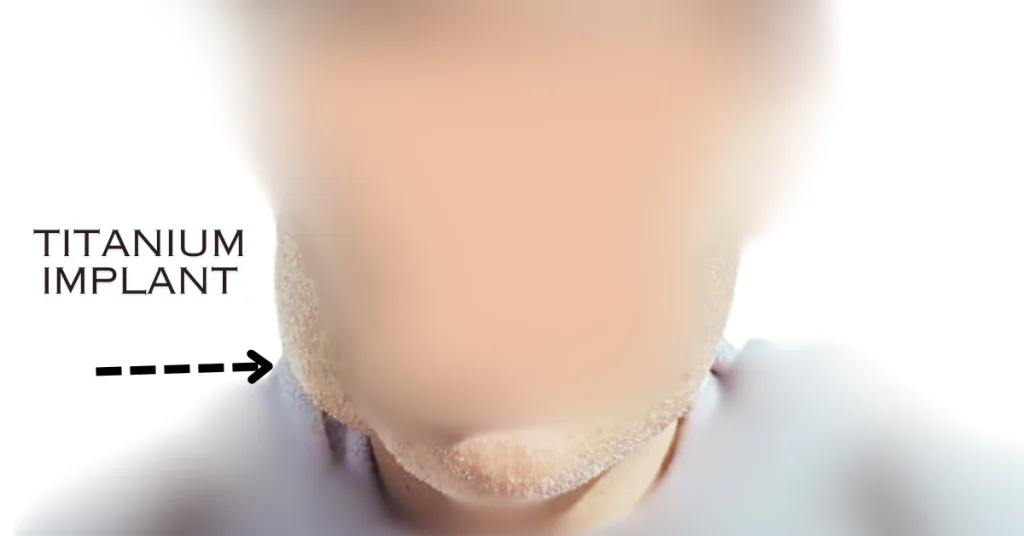
Fig. 2
Unedited image. Four months post-surgery. Initially, no complications were evident until sudden inflammation occurred, leading to the necessary removal of the implant.
Understanding Pockets
“Pockets” refer to the spaces formed around the implant during surgery, often presenting as a hematoma surrounding the implant. These pockets are the precursors to Capsular Contracture. The inability of the tissue to heal normally exacerbates this issue, leading to persistent swelling and the subsequent hardening process that characterizes Capsular Contracture. This condition often results in recurring infections, further complicating the healing process.
Why Surgeons Are Concerned
Despite the prevalence of Capsular Contracture, it is frequently misunderstood or underestimated. The condition is often misdiagnosed, with treatments typically involving antibiotics, massages, and lavages aimed at cleaning the affected area. Unfortunately, these interventions are rarely successful in reversing the contracture once it has formed.
If the pocket or space surrounding the implant is minimal and affects only a small portion of the area, there is some potential for healing. However, we have observed cases where swelling recurs years after the initial implantation.
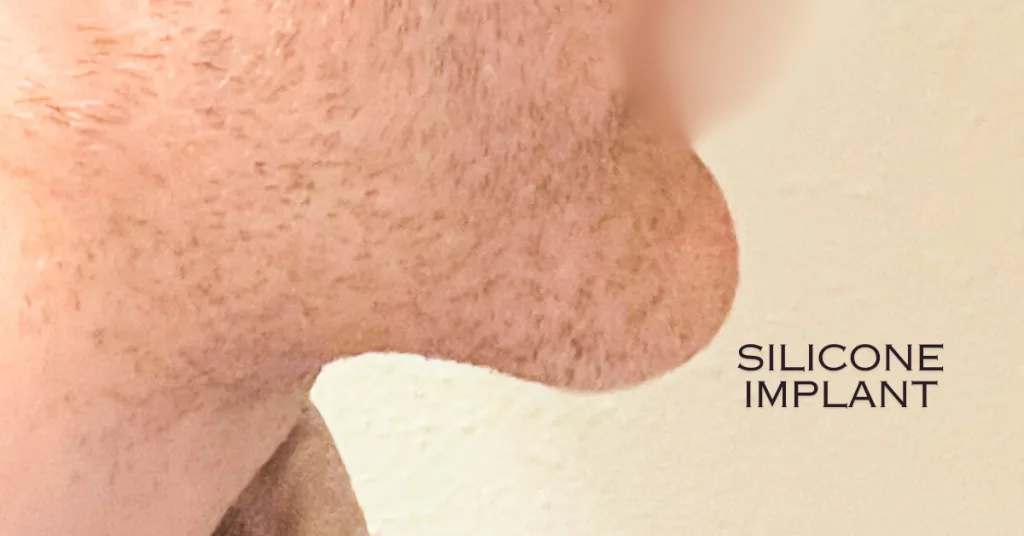
Fig. 3
Unedited image illustrating the ‘witch’s chin effect.’ To correct the resulting lip ptosis, resuspension of the chin muscles will be required.
The Real Cause: Disruption of Natural Healing
The root cause of Capsular Contracture lies in the introduction of a foreign body into the area. When an implant is placed, it creates a separation between the tissue and the bone, thereby disrupting the natural healing process. This disruption is particularly problematic with jaw implants, where the constant movement and pressure exerted by the masseter muscle exacerbate the issue. Although less common in chin and cheek implants, patients who frequently sleep on their sides may still experience prolonged swelling years after implantation. The only reliable method to mitigate or entirely eliminate the swelling and infection associated with Capsular Contracture is through the complete removal of the implants.
The Limitations of Biocompatible Materials
There is a common misconception that the use of biocompatible materials such as titanium or PEEK can prevent Capsular Contracture. However, our experience has shown that these materials do not eliminate or prevent the risk. Polymers and metals like PEEK, Silicone, or titanium are bioinert which act merely as a mass in the body.
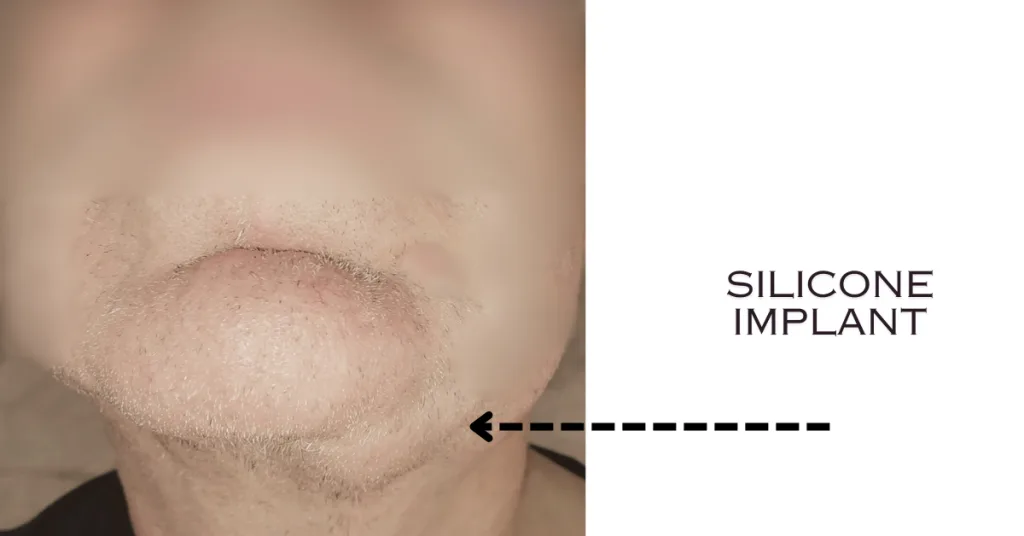
Fig. 4
Unedited image showing persistent swelling caused by a wraparound silicone implant, three years post-implantation. The swelling has been recurring since the procedure.
Our Innovative Solution
At Design My Implants, we advocate for the use of implants that closely mimic natural bone rather than relying on bioinert polymers or metals. This approach helps prevent the formation of Capsular Contracture, facilitating a more natural healing process and yielding better long-term outcomes for our patients.
Conclusion
Capsular Contracture in facial implants is a significant issue that warrants greater attention and understanding. Through our unique insights, we are at the forefront of developing effective solutions to address this challenging complication. By focusing on materials that promote healing and integrate seamlessly with the body, we minimize the possibility of Capsular Contracture formation and ensure optimal patient outcomes.
Call to Action
If you are considering facial implants or have experienced complications, we invite you to contact us at Design My Implants for expert advice and customized solutions tailored to your needs.
Learn more about DMI’s bone and tissue fusing implant technology.