
Who Decides What Looks “Best”?
When the objective is to enhance facial aesthetics or correct perceived skeletal defects, the solution is rarely straightforward. A fundamental question always arises: who defines the ideal outcome?
In facial surgery, aesthetics live at the intersection of two perspectives:
- The patient’s personal perception of their own face
- The surgeon’s trained eye, guided by proportion, symmetry, and anatomical norms
While these perspectives often align, there are cases where they diverge—and navigating that divergence thoughtfully is critical to achieving a result that feels both correct and authentic to the patient.
This case is a perfect example.
The Initial Assessment: Agreement—and Ambiguity
Both the patient and the surgical team agreed on two key findings:
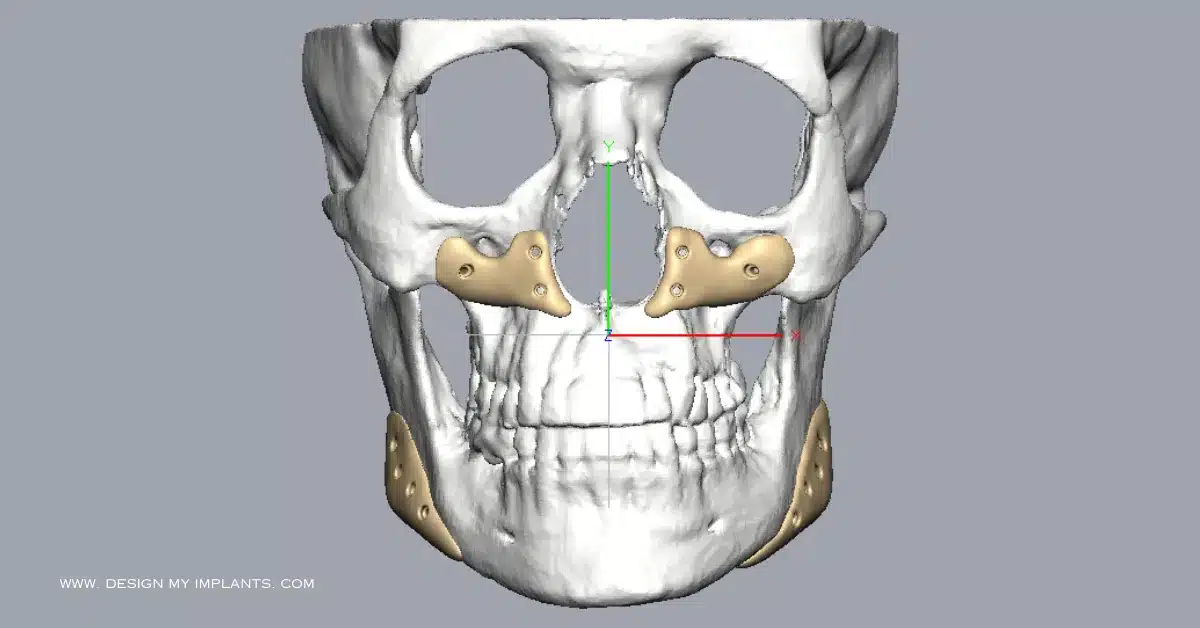
- There was a noticeable depression in the malar (cheek) region
- There was a clear asymmetry between the two sides of the jaw
Where clarity faded was in defining which side looked better.
One side of the jaw appeared more favorable—but “nice” is inherently subjective. To the surgeon and planning team, the right side appeared more balanced. To the patient, however, the left side felt more natural and representative of how he saw himself.
Neither perspective was wrong. This was not a technical disagreement—it was an aesthetic one.
Skeletal Analysis: What the Bone Revealed
A detailed 3D skeletal analysis of the maxillofacial structure provided objective insight beneath the subjective discussion.
The imaging demonstrated:
- A deep skeletal depression in the malar region, contributing to midface volume deficiency
- A true mandibular asymmetry, not merely soft-tissue variation
These findings confirmed that the concerns were structural in nature and could not be adequately corrected with soft-tissue solutions alone.
Option 1: Mirroring the “Preferred” Skeletal Side With Custom Jaw Implants
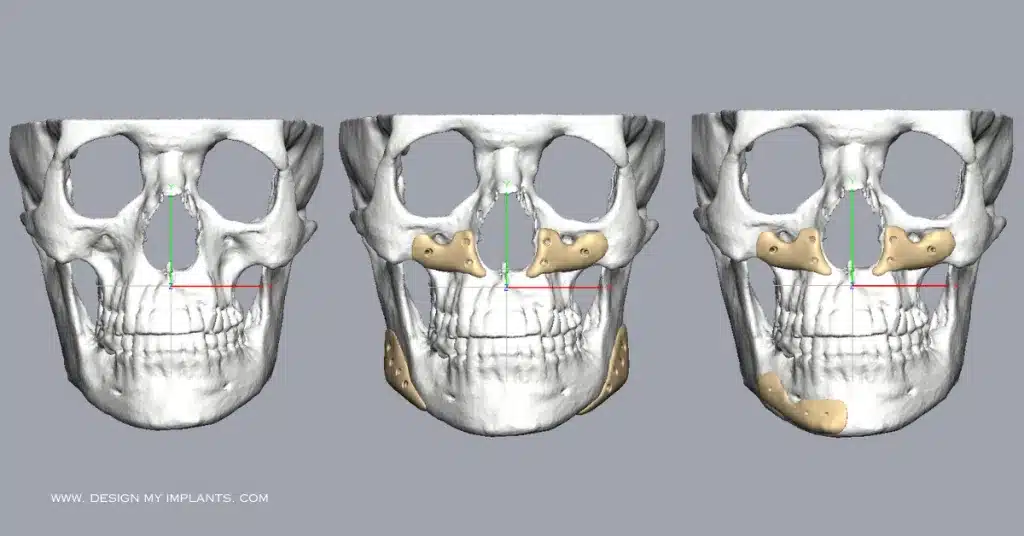
The first proposed solution followed a classic principle in facial symmetry correction.
The Concept
- Identify the objectively stronger jaw side
- Mirror that anatomy onto the contralateral side
- Use bilateral custom jaw implants to create skeletal symmetry
During digital planning, this approach produced excellent symmetry. Additionally, the design included a slightly more pronounced jawline, which complemented the patient’s facial proportions.
From a technical standpoint, the concept was sound, predictable, and elegant.
However, aesthetics are not decided by software alone.
Option 2: Designing Around the Patient’s Preferred Side
When the plan was presented, the patient expressed a crucial preference:
His favorite side was the left side—even though the surgeon and planning team favored the right.
This single piece of information fundamentally changed the treatment strategy.
Rather than forcing symmetry by copying the surgeon’s preferred side, the goal became preserving the patient’s identity while still achieving balance.
That required a completely different approach.
The Final Plan: Osteotomy, Custom Implants, and Strategic Volume Restoration
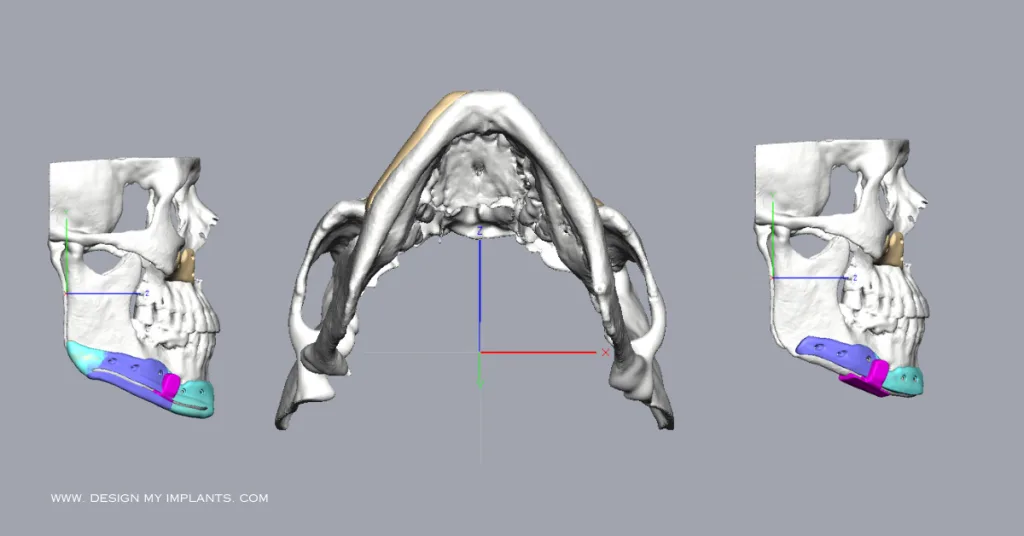
To honor the patient’s preference while correcting asymmetry, the final plan combined bone movement, precision guidance, and custom implant technology.
The Surgical Strategy Included:
- A lower mandibular osteotomy, performed with custom-designed surgical guides to ensure accuracy
- Cheek (malar) implants to restore midface volume and correct skeletal depression
- A custom Design My Implants (DMI) bioactive PEEK implant, selected specifically for mandibular contour refinement
This approach allowed the team to:
- Adjust skeletal position where needed
- Preserve the patient’s favored anatomy
- Achieve harmony without imposing an external aesthetic standard
Why Design My Implants PEEK Was Chosen
It is critical to emphasize that this case did not use traditional PEEK implants.
What Makes Design My Implants Bioactive PEEK Different?
Design My Implants manufactures bioactive PEEK implants that undergo a specialized surface activation process. This modification fundamentally changes how the implant interacts with the body.
1. Overcoming PEEK Bio-Inertness
Standard PEEK is mechanically excellent but biologically inert. Without surface modification, it may become encapsulated by fibrous tissue.
DMI’s bioactive surface transforms PEEK into a biologically interactive material, significantly reducing the risk of:
- Fibrous encapsulation
- Implant mobility
- Chronic inflammatory response
2. Creating a Stable Biological Interface
The activated surface is engineered to:
- Encourage direct interaction with surrounding tissues
- Support long-term stability
- Promote healthy soft-tissue adaptation around the implant
The clinical objective is not merely aesthetic enhancement, but durable skeletal integration and long-term predictability.
The Takeaway: Precision Meets Personal Identity
This case highlights a critical truth in modern facial surgery:
Symmetry is not dictated by software, surgeons, or averages—it is defined by the patient’s sense of self.
Advanced 3D planning, custom surgical guides, and bioactive custom implants give us the tools to achieve remarkable precision. But the most successful outcomes occur when those tools are used in service of the patient’s aesthetic identity.
By combining objective skeletal analysis with subjective preference—and executing the plan with custom bioactive PEEK technology—we were able to deliver a result that was not only symmetrical, but genuinely right for the patient.
Because in facial aesthetics, perfection isn’t imposed.
It’s designed—together.