
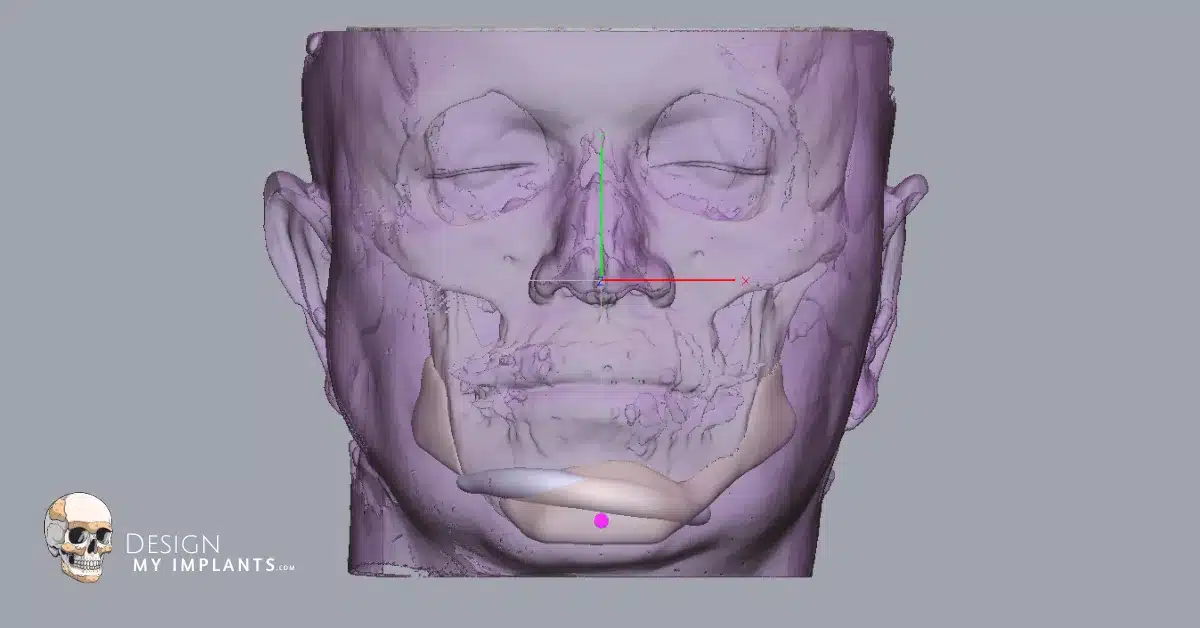
The strange thing you see in the middle of the chin is an off-the-shelf silicone implant. It shifted, eroded the bone, and caused this gentleman a lot of lost time.
If you are in a situation where you know you need to do something about your chin or jaw, but aren’t sure how to proceed, this case is a valuable learning experience.
Many patients seeking chin augmentation or jawline enhancement are unaware that standard implants can sometimes move or create complications. While many surgeons use off-the-shelf implants successfully, they are still generic devices placed onto highly unique anatomy.
When those implants shift, the result can be facial asymmetry, bone erosion, and an unnatural appearance.
That is exactly what happened here.
Identifying the Problem
When the surgeon contacted us, the mission was clear:
Understand what went wrong and design a custom solution that could correct it.
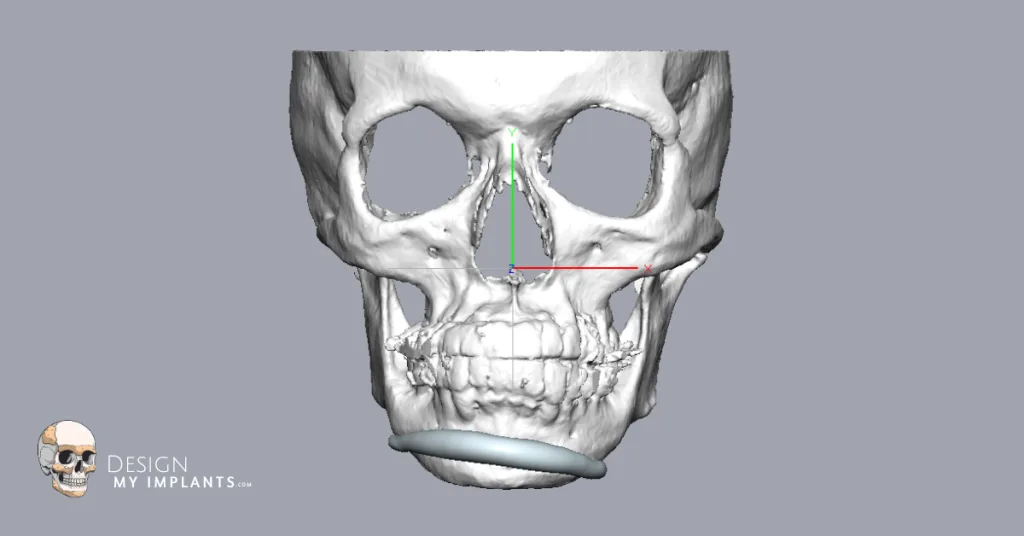
The first step was reviewing the patient’s 3D CT scan.
The silicone implant was obvious immediately. Not only could we see it on the scan, but it was also visible externally because it had shifted from its original position. The implant created a noticeable lopsided appearance to the chin, which had become progressively worse over time.
Even more concerning, the implant had started to erode the underlying mandibular bone.
This type of complication is one reason why surgeons increasingly turn to custom facial implants for both primary and revision procedures.
What the Patient Wanted
Despite the difficult experience with his previous implant, the patient knew exactly what he wanted moving forward.
He wanted:
• A stronger chin projection
• A more defined and chiseled jawline
However, design decisions must always respect facial proportions.
This patient does not have a narrow face. Because of that, overly widening the jaw would have created an unnatural result. Instead, the implant needed to enhance structure without exaggerating width.
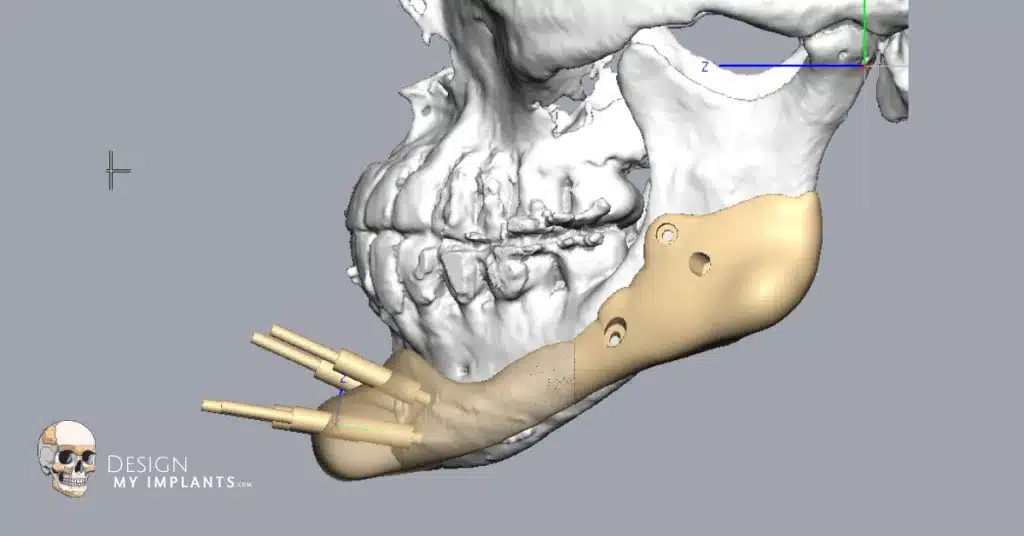
The solution was a custom chin and jaw implant designed specifically for his anatomy.
Designing the Custom Jawline Implant
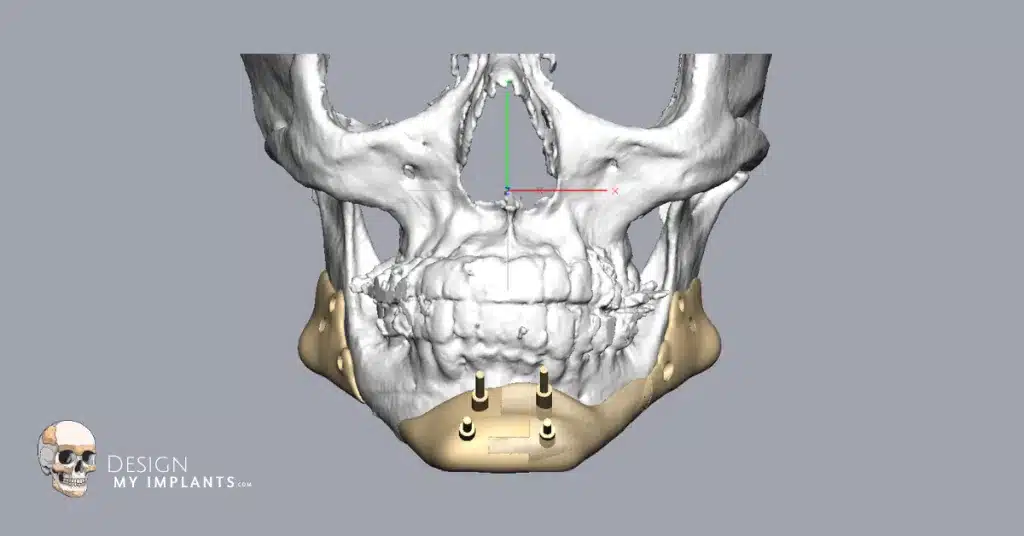
Using the CT scan, we began designing a patient-specific mandibular implant.
The custom implant was designed to:
• Correct asymmetry caused by the migrated implant
• Restore areas where bone erosion occurred
• Increase chin projection
• Improve the contour of the mandibular body
• Create a stronger jawline definition
Unlike standard implants, custom implants are designed directly on the patient’s CT anatomy, ensuring a perfect fit.
This allows surgeons to control:
• projection
• width
• symmetry
• implant stability
The result is a precision-engineered implant tailored to the individual patient.
Complementary Procedures: Neck Liposuction
Another important factor in jawline enhancement is soft tissue thickness.
Patients with thicker neck or submental tissue may benefit from neck liposuction performed at the same time as the jaw implant procedure.
This allows the new jaw contour to become more visible and enhances the mandibular definition.
It is not uncommon for surgeons to combine jawline implants with neck liposuction to improve the final aesthetic result.
The implant creates the structure, and soft-tissue contouring reveals it.
A Larger-Than-Typical Chin Implant
In this case, the design required a larger chin implant than typical.
This decision was made carefully with the surgeon’s guidance and based on the patient’s facial structure.
The goal was not simply size—it was balance.
The custom chin component of the implant:
• Restored the projection lost from the previous implant
• Corrected asymmetry
• Integrated seamlessly with the jaw extensions
• Created a masculine, balanced lower face
The final result produced a strong but natural chin and jawline.
Learning From a Failed Implant
While no one wants a failed procedure, it can sometimes provide valuable information.
It seems counterintuitive, but having had a bad chin implant gives us perspective.
It shows us:
• What projection was attempted
• how the soft tissue behaved
• where the implant migrated
• where bone erosion occurred
All of this becomes useful information when designing the new implant.
In many revision cases, the previous implant becomes a reference point for designing the improved solution.
A New Chapter for the Patient
We’re happy to be part of this handsome man’s journey.
Revision cases can be frustrating for patients who already invested time, money, and trust into a previous procedure.
But with custom facial implant technology and precise digital planning, surgeons can correct even complex situations.
The goal is not simply to replace an implant.
The goal is to restore balance, confidence, and facial harmony.
When Custom Chin and Jaw Implants Are the Best Option
Custom implants are often recommended for patients who have:
• failed chin implants
• implant shifting or migration
• bone erosion
• facial asymmetry
• weak chin projection
• underdeveloped jawlines
• complex revision cases
Because they are designed directly from the patient’s CT scan, they allow surgeons to achieve predictable and stable results.
If Something Feels Wrong With Your Chin Implant
If you have had a chin implant and feel something is not right, trust that instinct.
Shifting implants, asymmetry, or dissatisfaction are valid reasons to seek a second evaluation.
If you believe a custom chin or jaw implant may be the solution, get in touch with us—or have your surgeon contact us.
Together we can help take your results to the next level.

