
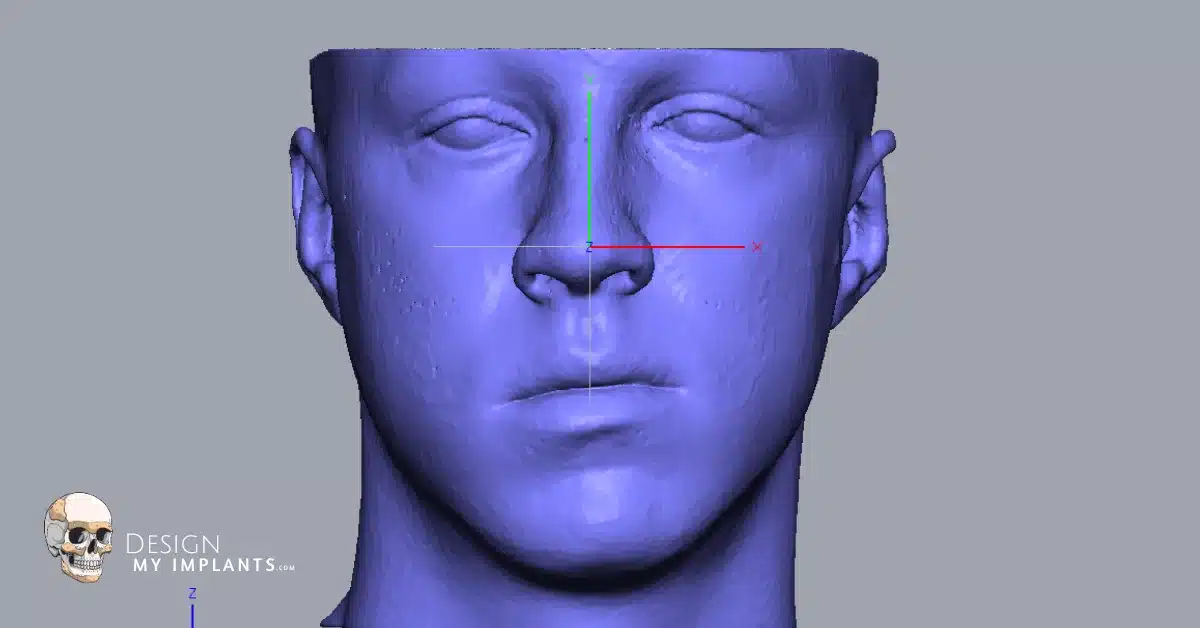
Some cases look straightforward at first glance—until you actually begin designing.
This patient is young, tall, athletic, and already good-looking. He has one major advantage from the start: a strong neck and underlying structure, which creates the perfect foundation for a more defined, masculine jawline.
And yet, like many cases we see, the challenge wasn’t about adding—it was about correcting asymmetry while enhancing strength at the same time.
The Reality of Jaw Asymmetry
Jaw asymmetry is rarely simple.
It’s not just a matter of one side being “smaller” or “lower.” It often involves a combination of:
- vertical discrepancies
- contour irregularities
- projection differences
- subtle shifts that affect the entire lower face
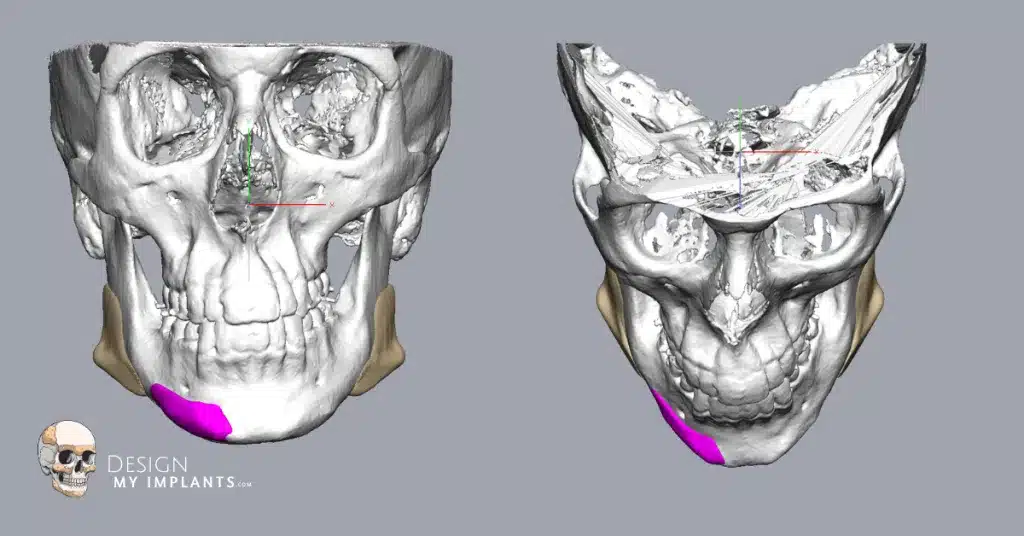
In this case, the asymmetry—highlighted in pink—shows a deficiency along the lower mandibular border and chin region.
This type of asymmetry can:
- disrupt jawline continuity
- reduce perceived strength
- affect overall facial balance
The Opportunity: Correct + Enhance
Cases like this present a decision point.
You can:
1. Simply correct the asymmetry
or
2. Correct it and elevate the entire structure
We chose the second approach.
Designing the Custom Jaw Implant
Using a patient-specific implant design, we addressed two goals simultaneously:
1. Correct the Asymmetry
- Restore balance to the lower jaw
- Rebuild the deficient mandibular border
- Create continuity from angle to chin
2. Enhance Masculine Definition
- Increase jawline sharpness
- Add controlled projection
- Match the strength of his neck and physique
Because of his athletic build, a stronger jaw is not just acceptable—it’s necessary for proportional balance.
Why Custom Implants Matter Here
This is not a case for standard implants.
Stock implants cannot:
- selectively build one side
- control vertical height precisely
- blend asymmetry naturally into the rest of the jaw
With custom jaw implants, we can:
- target only the deficient regions
- fine-tune millimeter-level differences
- maintain natural transitions across the mandible
The Design Strategy
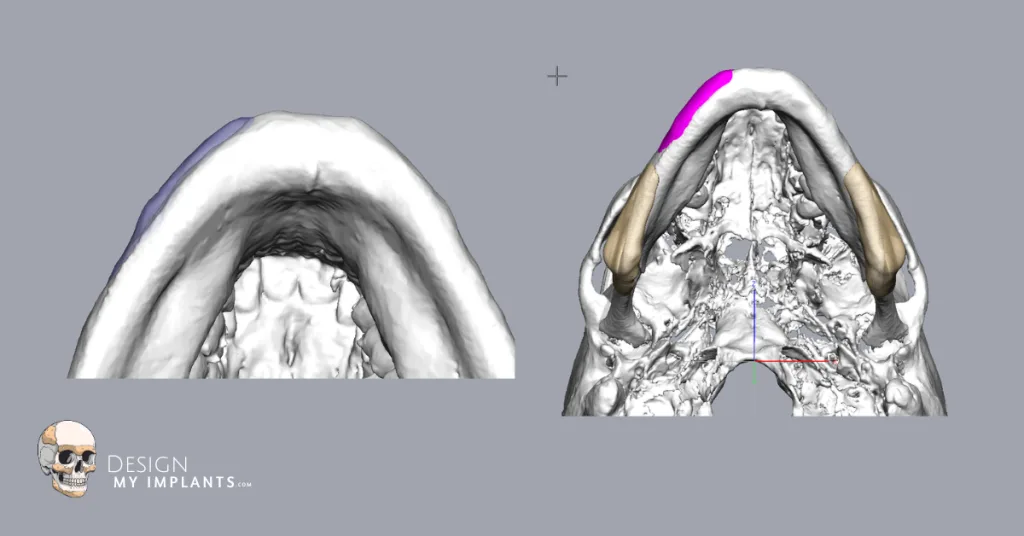
The highlighted (pink) region represents where volume was added strategically.
Instead of overcorrecting, the implant was designed to:
- subtly rebuild the lower border
- reinforce chin symmetry
- enhance overall jawline continuity
The result is not obvious augmentation—it’s structural correction with aesthetic elevation.
The Outcome: Controlled Strength
The final design achieves something very specific:
- The asymmetry is corrected
- The jawline is stronger
- The result matches his physical presence
Nothing looks artificial. Nothing looks overdone.
It simply looks… right.
The Bigger Takeaway
In patients like this, the goal isn’t transformation—it’s optimization.
The best results don’t just fix what’s wrong—
they elevate what’s already working.
A strong neck.
An athletic build.
A good baseline structure.
All of these were signals pointing toward one decision:
Build a jaw that matches the man.
Final Thought
Jaw asymmetry cases are rarely about symmetry alone.
They are about:
- balance
- proportion
- identity
With custom-designed implants, we’re no longer limited to correction.
We can design outcomes that are:
- precise
- proportional
- and purposefully strong
And in cases like this, that makes all the difference.
Explore custom implants for facial masculinization surgery.